


As a supplier of Compact Orifice Flow Meters, I often get asked if these nifty little devices can be integrated with other instruments. Well, the short answer is yes, they absolutely can! And in this blog, I'll dive into the details of how and why this integration is not only possible but also highly beneficial in various industrial applications.
Why Integrate a Compact Orifice Flow Meter?
Before we get into the nitty - gritty of integration, let's understand why it's such a great idea. A Compact Orifice Flow Meter is known for its accuracy in measuring the flow rate of fluids, whether it's gas or liquid. However, in modern industrial setups, we often need to gather multiple types of data simultaneously. For example, we might want to know the flow rate along with the pressure, temperature, or the composition of the fluid. By integrating the Compact Orifice Flow Meter with other instruments, we can create a more comprehensive monitoring system that provides a holistic view of the process.
Integration with Pressure Sensors
One of the most common integrations is with pressure sensors. The principle behind a Compact Orifice Flow Meter is based on the pressure difference created as the fluid passes through the orifice plate. By connecting the flow meter to a high - quality pressure sensor, we can get more accurate measurements of this pressure differential. This is crucial because any inaccuracies in pressure measurement can lead to errors in flow rate calculation.
For instance, if we're dealing with a high - pressure fluid flow, a well - integrated pressure sensor can help us adjust the flow meter readings in real - time, making sure that we're getting the most precise data possible. This combination is especially useful in industries like oil and gas, where accurate flow measurement is essential for production control and safety.
Temperature Sensors
Temperature also plays a significant role in fluid flow. The density and viscosity of a fluid can change with temperature, which in turn affects the flow rate. By integrating a Compact Orifice Flow Meter with a temperature sensor, we can compensate for these temperature - related changes.
Let's say we're measuring the flow of a liquid in a chemical plant. The temperature of the liquid can vary depending on the process conditions. With a temperature sensor integrated into the system, we can use the temperature data to correct the flow meter readings. This ensures that the flow rate we're measuring is accurate, regardless of temperature fluctuations.
Level Sensors
In some industrial applications, it's important to know the level of the fluid in addition to its flow rate. For example, in a storage tank, we need to monitor both how much fluid is flowing in and out and the current level of the fluid. By integrating a Compact Orifice Flow Meter with a level sensor, we can have a complete picture of the fluid situation in the tank.
The flow meter can measure the inflow and outflow rates, while the level sensor can tell us the current volume of the fluid in the tank. This integrated system can help in better inventory management and prevent over - filling or under - filling of the tanks.
Integration with Advanced Flow Meters
Compact Orifice Flow Meters can also be integrated with other types of advanced flow meters. For example, Rosemount 8750W Magnetic Flow Meters For Utility Water Applications are great for measuring the flow of conductive fluids. By combining a Compact Orifice Flow Meter with a magnetic flow meter, we can take advantage of the strengths of both.
The Compact Orifice Flow Meter is good for measuring a wide range of fluids, while the magnetic flow meter provides high - accuracy measurements for conductive fluids. This integration can be useful in water treatment plants, where different types of fluids need to be measured accurately.
Our Rosemount™ 4051SFC Compact Orifice Flow Meter
Our Rosemount™ 4051SFC Compact Orifice Flow Meter is designed with integration in mind. It has a modular design that allows for easy connection with other instruments. The meter comes with standard communication protocols, which makes it compatible with a variety of sensors and control systems.
Whether you want to integrate it with a pressure sensor, temperature sensor, or another flow meter, our Compact Orifice Flow Meter can be easily incorporated into the existing system. This not only saves time and effort but also reduces the cost of installation and maintenance.
Multiphase Flow Meters Integration
In some complex industrial processes, we deal with multiphase flows, where the fluid consists of a combination of gas, liquid, and sometimes solid particles. Roxar 2600 Multiphase Flow Meters are designed specifically for these types of applications.

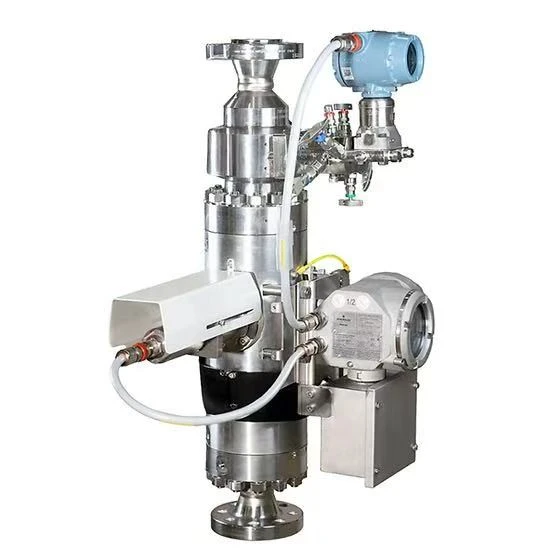
By integrating our Compact Orifice Flow Meter with a Roxar 2600 Multiphase Flow Meter, we can get a more detailed analysis of the multiphase flow. The Compact Orifice Flow Meter can provide basic flow rate information, while the multiphase flow meter can give us data on the composition and distribution of the different phases. This combination is extremely valuable in the oil and gas industry, where multiphase flows are common during production and transportation.
How to Achieve Integration
Achieving integration between a Compact Orifice Flow Meter and other instruments is not as complicated as it might seem. First of all, make sure that all the instruments are compatible in terms of communication protocols. Most modern instruments use standard protocols like Modbus, HART, or Profibus, which makes integration easier.
Next, you'll need to install the instruments in a way that allows for proper data transfer. This might involve running cables or using wireless communication devices. Once the physical installation is done, you can use software to configure the system and ensure that all the instruments are working together seamlessly.
Wrap - Up and Call to Action
In conclusion, integrating a Compact Orifice Flow Meter with other instruments is not only possible but also a smart move for any industrial application. It allows for more accurate and comprehensive data collection, which in turn leads to better process control and increased efficiency.
If you're interested in learning more about how our Compact Orifice Flow Meters can be integrated with other instruments or if you're looking to purchase a flow meter, don't hesitate to reach out. We'd be more than happy to discuss your specific needs and provide you with the right solutions.
References
- "Flow Measurement Handbook: Industrial Designs and Applications" by Richard W. Miller
- Various technical documents from instrument manufacturers about their products' integration capabilities.


