


In the field of industrial automation and process control, the Rosemount 3051 series stands as a benchmark for differential and pressure measurement. Among these, the 3051C and 3051D are the two most widely used models and are frequently compared by engineers during the selection process. Although both share the same origins and are based on a coplanar design, they exhibit distinct differences in measurement capabilities, performance parameters, and application positioning, which directly impact process suitability and cost control.
Product Positioning and Core Differences: Same Origin, Different Roles
Both the 3051C and 3051D belong to the Emerson Rosemount 3051 coplanar pressure transmitter family. Their core measurement principle is capacitive sensing, which converts capacitance differences generated by diaphragm deformation into a 4–20 mA + HART digital signal. However, their positioning is distinct:
*3051C: A full-featured flagship model covering differential pressure, gauge pressure, and absolute pressure measurements, emphasizing high accuracy, adaptability to all scenarios, and enhanced smart functionality.
*3051D: A cost-effective professional model focused on differential and gauge pressure measurement, emphasizing stability, reliability, and practicality for standard industrial applications.
In short: The 3051C is the all-rounder, while the 3051D is the specialized, practical choice.
Comparison of Key Parameters: Accuracy, Range, and Measurement Capabilities
1. Measurement Types (Core Differences)
• 3051C: Supports three measurement types-differential pressure (CD), gauge pressure (CG), and absolute pressure (CA)-covering all pressure measurement scenarios and directly replacing multiple product models.
• 3051D: Supports only differential pressure (DP) and gauge pressure (GP); lacks absolute pressure measurement capability, focusing on mainstream differential and gauge pressure applications.
2. Accuracy and Stability
• 3051C: Reference accuracy ±0.04% to ±0.065% (depending on range), turndown ratio 150:1, 10-year long-term stability, equipped with intelligent algorithms such as loop diagnostics and pressure tubing blockage detection.
• 3051D: Reference accuracy ±0.05% to ±0.065%, turndown ratio 100:1, 10-year stability, basic intelligent functions, meeting accuracy requirements for standard operating conditions.
3. Measurement Range
• 3051C (Differential Pressure CD): 0.1 inH₂O to 2000 psi (0.025 mbar to 138 bar), covering the full range from low differential pressure to high differential pressure.
• 3051D (Differential Pressure DP): 0.5 inH₂O to 2000 psi (0.124 mbar to 138 bar), with a slightly higher lower limit for low differential pressure and full coverage of the main measurement range.
4. Core Common Parameters
• Output Signal: 4–20 mA + HART communication
• Operating Temperature: –40°C to 85°C
• Protection Rating: IP67
• Explosion-Proof Certification: Supports intrinsically safe and flameproof designs, suitable for hazardous areas
• Wetted Materials: 316L stainless steel, Hastelloy C276, and other options available
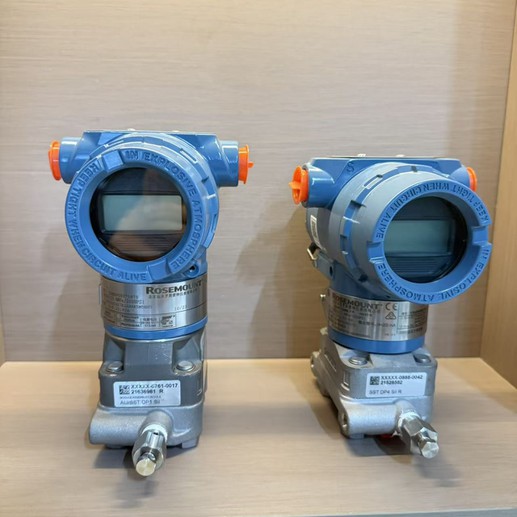
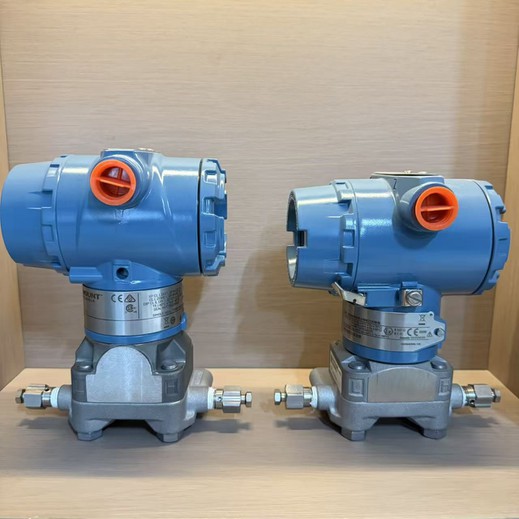
Structural and Functional Differences: Design Details Determine Compatibility
1. Coplanar Design: Both models feature a coplanar structure, with high- and low-pressure ports on the same plane. This reduces the overall volume by 30% and allows for direct installation of valve assemblies and remote sealing components, thereby minimizing potential leak points and simplifying installation.
2. Smart Features: The 3051C offers more comprehensive capabilities, supporting Bluetooth commissioning, a graphical backlit display, dedicated flow/level configurations, and loop integrity diagnostics; the 3051D focuses primarily on basic HART communication and local commissioning, featuring streamlined and practical functionality.
3. Model Range: The 3051C offers a wider range of variants (e.g., high static pressure, low differential pressure, remote transmission models); The 3051D focuses on standard differential pressure and gauge pressure, with a streamlined model lineup for more efficient inventory management and delivery.
Typical Application Scenarios: Precisely Matching Operational Requirements
1. 3051C Application Scenarios (High Precision/Full Functionality/Complex Conditions)
• High-precision measurement: Pharmaceutical, fine chemicals, food and beverage industries requiring measurement error ≤0.05%
• Absolute Pressure Measurement: Vacuum distillation, semiconductor processes, and absolute pressure monitoring of low-pressure vessels;
• Smart Diagnostics: Long-term unattended installations requiring remote diagnostics and fault alerts;
• Multi-Scenario Reusability: Projects requiring simultaneous coverage of differential, gauge, and absolute pressure to reduce the number of model variants;
2. 3051D Application Scenarios (High Cost-Effectiveness / Standard Operating Conditions)
• Mainstream Differential Pressure Measurement: Flow (orifice plates, Venturi tubes) and level (storage tanks, reactors) monitoring in the petroleum, chemical, and power industries
• Gauge Pressure Measurement: Pipeline pressure, filter differential pressure, and pump discharge pressure monitoring
• Cost-Sensitive Projects: Large-scale bulk procurement seeking a balance between stability, reliability, and cost-effectiveness
• Standard operating conditions: Standard industrial scenarios with no absolute pressure requirements and no need for complex intelligent diagnostics.
Selection Summary: How to Choose Between the 3051C and 3051D?
• Choose the 3051C: When absolute pressure measurement is required, the highest accuracy (±0.04%) is sought, intelligent diagnostic functions are essential, and application scenarios are complex and variable.
• Choose the 3051D: When only differential pressure or gauge pressure is required, cost control is a priority, operating conditions are stable and routine, and the goal is stability, reliability, and high cost-effectiveness.
Both are reliable choices for industrial measurement. The core differences lie in measurement capabilities, maximum accuracy, and smart features. Selection should be based on a comprehensive assessment of measurement type, accuracy requirements, budget, and operational complexity to ensure precise compatibility, cost reduction, and efficiency gains.


