


When it comes to measuring liquid temperatures accurately, the 114C Thermowell plays a crucial role in various industrial applications. As a supplier of the 114C Thermowell, I have witnessed firsthand the importance of its accuracy in ensuring reliable temperature measurements. In this blog post, I will delve into the factors that affect the accuracy of the 114C Thermowell and how it performs in real-world scenarios.
Understanding the 114C Thermowell
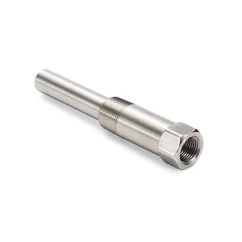
The 114C Thermowell is a specialized device designed to protect temperature sensors from the harsh conditions of the process fluid. It provides a physical barrier between the sensor and the fluid, preventing direct contact and ensuring the sensor's longevity. The thermowell is typically made of materials such as stainless steel, carbon steel, or exotic alloys, depending on the application requirements.
One of the key features of the 114C Thermowell is its ability to accurately transfer the temperature of the fluid to the sensor. This is achieved through a combination of thermal conductivity and design optimization. The thermowell is designed to have a high thermal conductivity, allowing it to quickly and efficiently transfer heat from the fluid to the sensor. Additionally, the shape and size of the thermowell are carefully engineered to minimize any temperature gradients or delays in the heat transfer process.
Factors Affecting Accuracy
Several factors can affect the accuracy of the 114C Thermowell when measuring liquid temperatures. Understanding these factors is essential for ensuring accurate and reliable temperature measurements.
Fluid Velocity
The velocity of the fluid flowing past the thermowell can have a significant impact on its accuracy. At low fluid velocities, the heat transfer between the fluid and the thermowell may be slow, leading to a delay in the temperature measurement. On the other hand, at high fluid velocities, the thermowell may experience turbulence, which can cause fluctuations in the temperature measurement. To minimize these effects, it is important to select a thermowell with a design that is optimized for the specific fluid velocity range of the application.
Fluid Properties
The properties of the fluid being measured, such as its viscosity, density, and thermal conductivity, can also affect the accuracy of the thermowell. Fluids with high viscosities or low thermal conductivities may require a longer time to transfer heat to the thermowell, resulting in a slower response time and potentially less accurate measurements. Additionally, fluids that are corrosive or abrasive may cause damage to the thermowell over time, affecting its performance and accuracy.
Installation
Proper installation of the 114C Thermowell is crucial for ensuring accurate temperature measurements. The thermowell should be installed in a location where it is fully immersed in the fluid and is not subject to any external factors that could affect its performance, such as vibrations or mechanical stress. Additionally, the thermowell should be installed at the correct depth and angle to ensure optimal heat transfer and minimize any temperature gradients.

Sensor Accuracy
The accuracy of the temperature sensor used in conjunction with the thermowell also plays a significant role in the overall accuracy of the temperature measurement. It is important to select a high-quality sensor with a known accuracy specification and to calibrate it regularly to ensure accurate measurements.
Real-World Performance
In real-world applications, the accuracy of the 114C Thermowell can vary depending on the specific conditions and factors mentioned above. However, when properly selected, installed, and maintained, the 114C Thermowell can provide highly accurate and reliable temperature measurements.
For example, in a chemical processing plant, the 114C Thermowell may be used to measure the temperature of a corrosive fluid flowing through a pipeline. By selecting a thermowell made of a corrosion-resistant material and installing it at the correct depth and angle, the thermowell can accurately measure the temperature of the fluid without being affected by the corrosive properties of the fluid.
In another example, in a food processing plant, the 114C Thermowell may be used to measure the temperature of a viscous liquid, such as syrup or honey. By selecting a thermowell with a design that is optimized for high-viscosity fluids and installing it in a location where the fluid is flowing smoothly, the thermowell can accurately measure the temperature of the liquid without experiencing any significant delays or fluctuations.
Comparison with Other Temperature Measurement Devices
The 114C Thermowell is just one of many temperature measurement devices available on the market. When compared to other devices, such as Wireless Temperature Transmitters or Rosemount 3144S Temperature Transmitters, the 114C Thermowell offers several advantages.
One of the main advantages of the 114C Thermowell is its durability and reliability. The thermowell provides a physical barrier between the sensor and the fluid, protecting the sensor from the harsh conditions of the process environment. This can significantly extend the lifespan of the sensor and reduce the need for frequent replacements.
Another advantage of the 114C Thermowell is its accuracy. By carefully selecting the thermowell material, design, and installation location, the thermowell can provide highly accurate and reliable temperature measurements. This is particularly important in applications where precise temperature control is critical, such as in chemical processing or food production.
Conclusion
In conclusion, the accuracy of the 114C Thermowell when measuring liquid temperatures depends on several factors, including fluid velocity, fluid properties, installation, and sensor accuracy. When properly selected, installed, and maintained, the 114C Thermowell can provide highly accurate and reliable temperature measurements in a wide range of industrial applications.
If you are in need of a high-quality temperature measurement solution for your application, I encourage you to consider the 114C Thermowell. As a supplier of the 114C Thermowell, I am committed to providing our customers with the best products and services. If you have any questions or would like to discuss your specific requirements, please do not hesitate to contact us. We look forward to working with you to find the perfect temperature measurement solution for your needs.
References
- "Temperature Measurement Basics," Instrumentation Tools.
- "Thermowell Selection Guide," Emerson Automation Solutions.
- "Accuracy of Temperature Measurement in Industrial Processes," Journal of Process Control.


