


Hey there! As a supplier of the 114C Thermowell, I've seen my fair share of issues with these nifty gadgets. So, I thought I'd share some of the common failures you might run into with the 114C Thermowell.
Vibration - Induced Failures
One of the most common problems we come across is vibration - induced failures. You see, in industrial settings where the 114C Thermowell is often used, there's a lot of machinery running. All that movement causes vibrations. Over time, these vibrations can take a toll on the thermowell.
The constant shaking can lead to fatigue cracks. These cracks start small, but they grow with each vibration cycle. Eventually, the thermowell can break completely. This is a big deal because once the thermowell breaks, it can no longer protect the temperature sensor inside. And if the sensor gets damaged, you won't be able to get accurate temperature readings.
To give you an idea of how bad it can get, I once had a customer who was using the 114C Thermowell in a factory with a lot of heavy - duty equipment. They didn't notice the early signs of vibration damage, and one day, the thermowell just snapped. It caused a major disruption in their production process because they had to shut down the equipment to replace the thermowell and the damaged sensor.
Corrosion
Corrosion is another major headache when it comes to the 114C Thermowell. Depending on the environment where the thermowell is installed, it can be exposed to all sorts of corrosive substances. For example, in chemical plants, the thermowell might come into contact with acids or alkalis. In marine applications, saltwater can be extremely corrosive.
When corrosion sets in, it eats away at the material of the thermowell. This weakens the structure, making it more prone to failure. The corrosion can also affect the accuracy of the temperature readings. If the thermowell's wall thickness is reduced due to corrosion, it won't conduct heat as efficiently, leading to inaccurate temperature measurements.
I remember a case where a customer was using the 114C Thermowell in a coastal power plant. The saltwater in the area was really aggressive. After a few months, they started noticing that the temperature readings were off. When they inspected the thermowell, they found that it was severely corroded. They had to replace it right away to get accurate temperature data again.
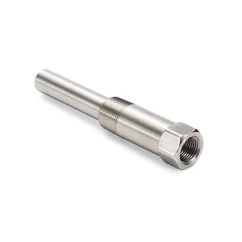

Improper Installation
You'd be surprised how often improper installation leads to failures of the 114C Thermowell. Installing a thermowell isn't as simple as just sticking it in a hole. There are specific guidelines that need to be followed.
For example, if the thermowell isn't inserted to the correct depth, it won't be able to measure the temperature accurately. If it's too shallow, it might only measure the temperature of the surface layer, which could be different from the actual process temperature. If it's too deep, it could interfere with the flow of the process fluid, causing additional stress on the thermowell.
Also, the way the thermowell is mounted matters. If it's not secured properly, it can move around, especially in high - flow applications. This movement can lead to vibration - induced failures or even cause the thermowell to come loose completely.
I had a client who installed the 114C Thermowell themselves without following the installation manual. They didn't insert it to the right depth, and they didn't tighten the mounting bolts properly. As a result, they were getting inconsistent temperature readings, and the thermowell was starting to vibrate. We had to send a technician to correct the installation, which cost them extra time and money.
Over - Temperature Conditions
The 114C Thermowell is designed to work within a certain temperature range. If it's exposed to temperatures higher than its rated limit, it can cause all sorts of problems.
At high temperatures, the material of the thermowell can start to deform. This deformation can change the shape of the thermowell, which in turn affects its ability to protect the temperature sensor and measure the temperature accurately. In extreme cases, the thermowell can even melt or become so brittle that it breaks easily.
I know of a situation where a customer accidentally exposed the 114C Thermowell to a temperature spike in their industrial furnace. The thermowell started to warp, and the temperature readings became completely unreliable. They had to replace the thermowell and recalibrate the temperature sensor to get things back in order.
Erosion
Erosion can also cause failures of the 114C Thermowell. In applications where there's a high - velocity flow of fluid or gas, the particles in the flow can wear away the surface of the thermowell.
For instance, in a steam pipeline, the high - speed steam can carry small droplets or particles that act like sandpaper on the thermowell. Over time, this erosion can reduce the wall thickness of the thermowell, making it weaker. Similar to corrosion, a thinner wall can affect heat conduction and lead to inaccurate temperature measurements.
I once dealt with a customer in a power generation plant. Their thermowell in the steam line was suffering from erosion. The constant flow of steam with some impurities was gradually wearing it down. They had to monitor the thermowell closely and replace it before it failed completely.
How to Avoid These Failures
Now that we've talked about the common failures, let's discuss how you can avoid them.
First, make sure to choose the right material for the 114C Thermowell based on the environment it will be used in. If it's a corrosive environment, select a material that is resistant to corrosion, like stainless steel or a special alloy.
Second, follow the installation guidelines carefully. If you're not sure how to install the thermowell, don't hesitate to ask for help. We're always here to provide support and guidance.
Third, monitor the thermowell regularly. Check for signs of corrosion, erosion, or any other damage. If you notice any issues early, you can take corrective action before it leads to a major failure.
Finally, make sure the thermowell is operating within its rated temperature and pressure limits. If you expect to have extreme conditions, consider using a thermowell that is designed for those specific conditions.
If you're in the market for a reliable 114C Thermowell or related products like the Wireless Temperature Transmitter or Head Mount Temperature Transmitter, feel free to reach out. We're a trusted supplier, and we can offer you high - quality products and excellent customer service. Whether you need help with product selection, installation, or troubleshooting, we're here for you. So, don't hesitate to contact us for all your temperature measurement needs. We're looking forward to doing business with you and helping you avoid those pesky thermowell failures.
References
- Industrial Temperature Measurement Handbook
- ASME PTC 19.3 - Thermowells Standard


